
NFS HospitalityAloha

Hardware

Aloha hardware

Aloha runs on hardware designed for the pressure of hospitality, supplied and supported by NFS so it holds up through every busy shift.

Alongside the devices, NFS handles integration and implementation, helping every Aloha site get the most value from its technology spend.

Aloha EPoS terminals

Hard-wearing tills for high-volume service.

Front-of-house operations revolve around the till. Aloha EPoS terminals from NFS are made for high-volume hospitality and built to keep going through years of everyday service.
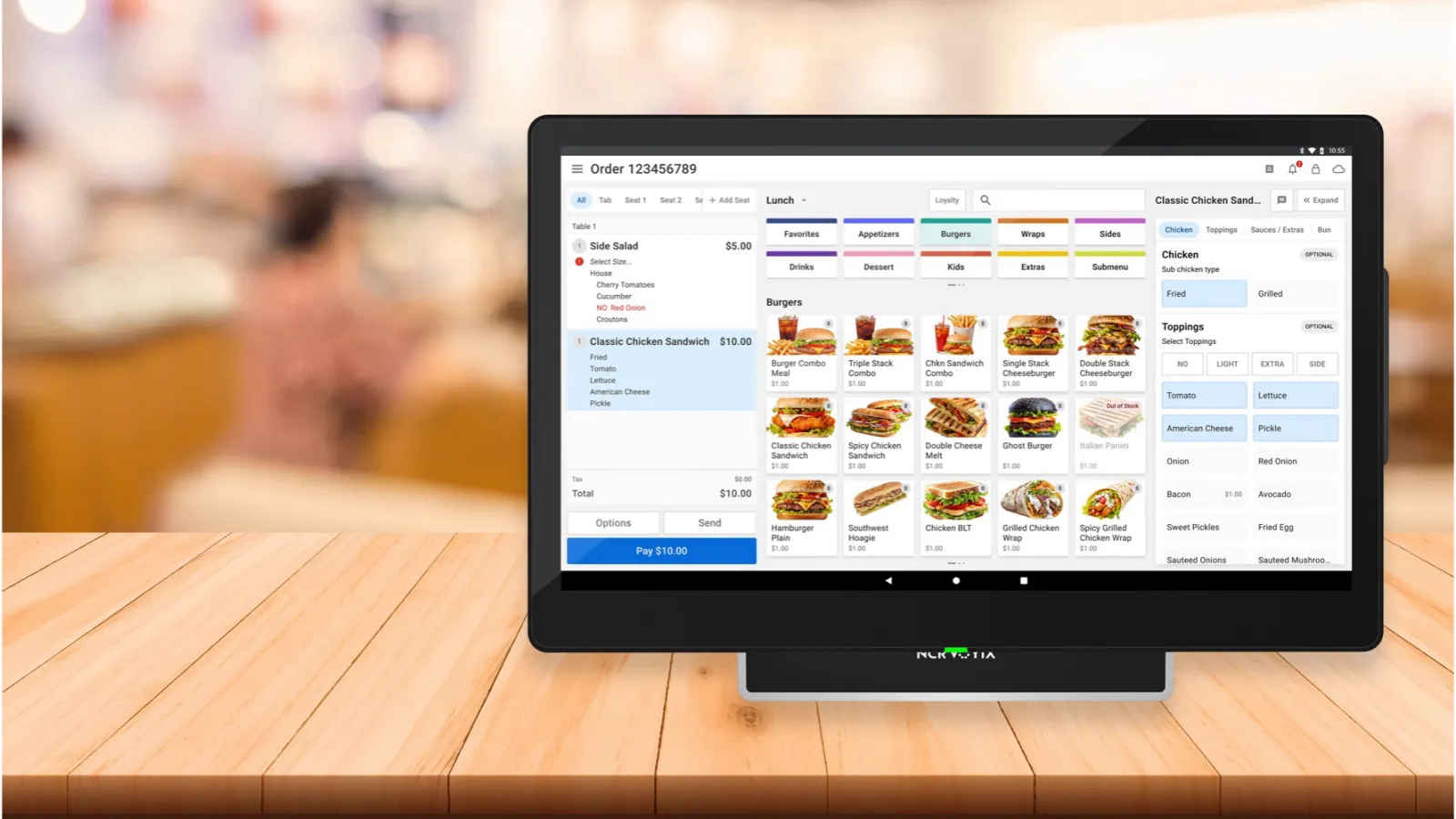
Aloha EPoS terminal showing an order screen on a wooden counter

Key points

All-in-one performance: quick, responsive touchscreens in several screen sizes for counters, bars and server stations.
Fanless and energy efficient: with no fan drawing in grease and dust, these suit bars and tight counter spaces.
Everything around the till: receipt printers, cash drawers, customer displays and programmable keyboards for one-touch functions.
Installed and looked after: NFS sets up and configures every terminal and supports it afterwards, so you're ready to trade from day one.
Mobile ordering devices

Aloha handhelds, Apple devices and approved third-party hardware.

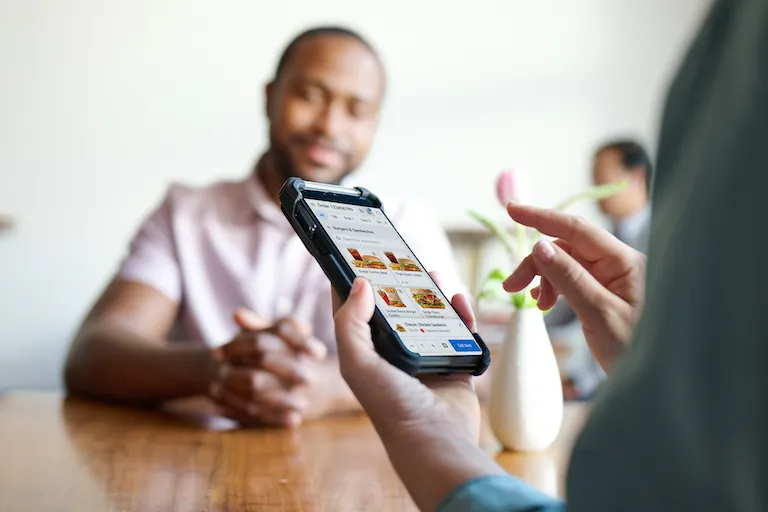
Aloha Mobile brings the EPoS to wherever your guests are, from the table to the terrace or the queue. Staff take orders and payments on the spot, and each order reaches the kitchen or bar the moment it's entered.

Server entering an order on a handheld device at a guest’s table

Key points

Tableside ordering and payment: orders reach the kitchen or bar straight away, and guests settle up without waiting for a card machine.
Quick to learn: Aloha Mobile looks and works like the fixed Aloha EPoS, so staff pick it up fast.
Prompted upselling: on-screen suggestions for add-ons and modifiers raise average spend and keep orders accurate.
Choose your devices:
Rugged Aloha handhelds: PCI-certified Android devices with a built-in chip, contactless and swipe readers, a battery that lasts the whole shift and optional charging bases.
Apple iPad and iPhone: run the Aloha Mobile app on familiar consumer devices, if that's what your venue prefers.
Rugged Android and Windows tablets: a good fit for managers, hosts and queue-busting.
Orderman handhelds: tough devices for managers moving around the floor, hosts on the door and staff on the queue.

Self-order kiosks

Extra ordering capacity when you need it most.

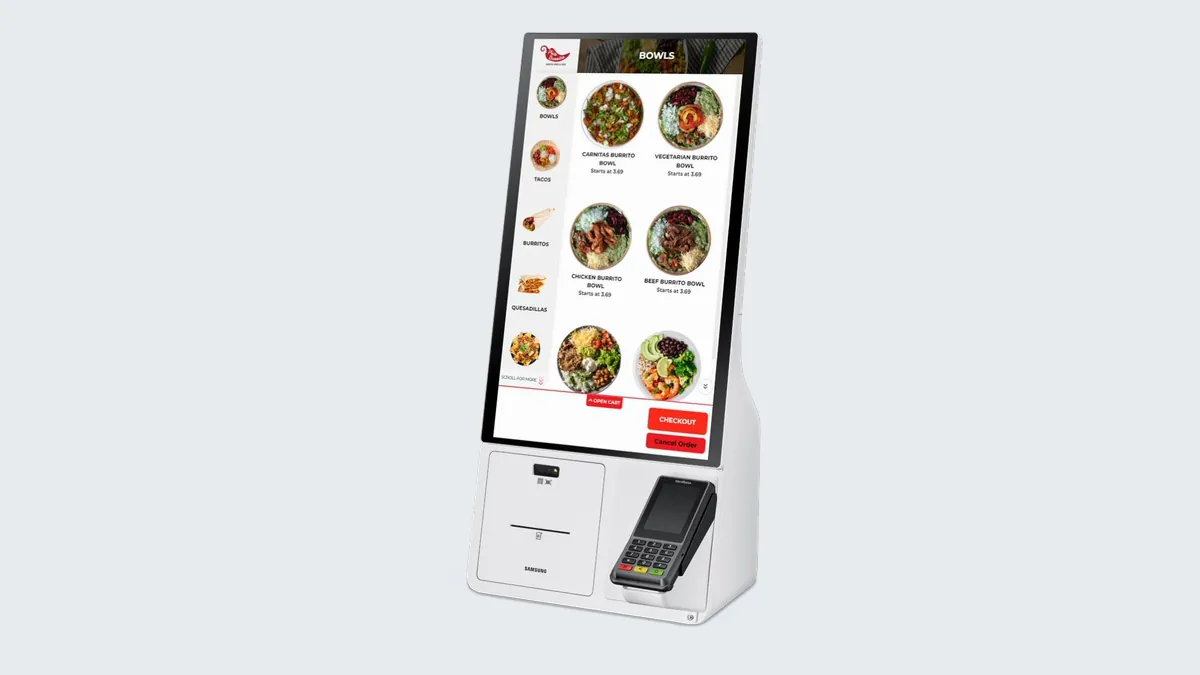
With kiosks, guests browse the menu, tailor their order and pay in their own time, leaving your team free to prepare and serve. Aloha Kiosk links directly with Aloha EPoS, so every order and payment lands in your operation automatically. Menus, prices and specials are controlled from one place, and any change or sold-out item updates on every kiosk at the same time. Queues shorten, service speeds up and guests have an easier experience during your busiest periods.

Self-order kiosk showing a food menu, with a card reader below the screen

Key points

Serve more without hiring more: kiosks open up extra ordering points through the lunch and evening rush with no added headcount.
Higher average spend: automatic upsell prompts offer a side or upgrade on every order, every time.
Fewer mistakes: guests put together their own orders, cutting out errors and remakes.
Payment built in: card and contactless are part of the ordering journey.
A format for every space: freestanding, wall-mounted and countertop units to suit your layout and brand.
Best suited to: QSR, fast casual, food halls, leisure venues and stadiums.

Kitchen display hardware

Orders reach the kitchen clearly and quickly.

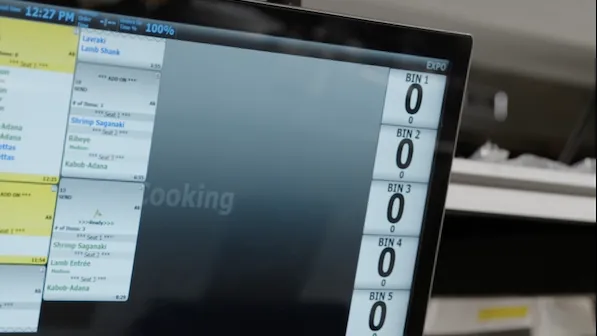
A kitchen display system (KDS) takes the place of paper tickets, showing each order live, sending items to the correct station and keeping front and back of house aligned. Aloha kitchen hardware is made to cope with heat, steam, grease and service that never stops.

Kitchen display screen showing live orders

Key points

Kitchen touchscreens: large full HD displays housed in stainless steel to stand up to common kitchen contaminants, with flexible mounting so chefs can view several orders together.
Kitchen controllers: solid-state hardware with no moving parts that keeps the kitchen working if the back-office connection drops, and mounts on a wall, pole, ceiling or radial arm.
Bump bars: tough aluminium control pads with rubber end caps, programmable keys to bump, recall and prioritise orders, and a speaker with adjustable volume so alerts carry over kitchen noise.
Aloha Kitchen software: sends orders to the right station, monitors ticket times and lets you add or adjust stations without reconfiguring everything.
What it delivers: no more lost tickets, quicker ticket times and a more consistent pass.

Card payment terminals

Card terminals linked to Aloha, from the provider you choose.

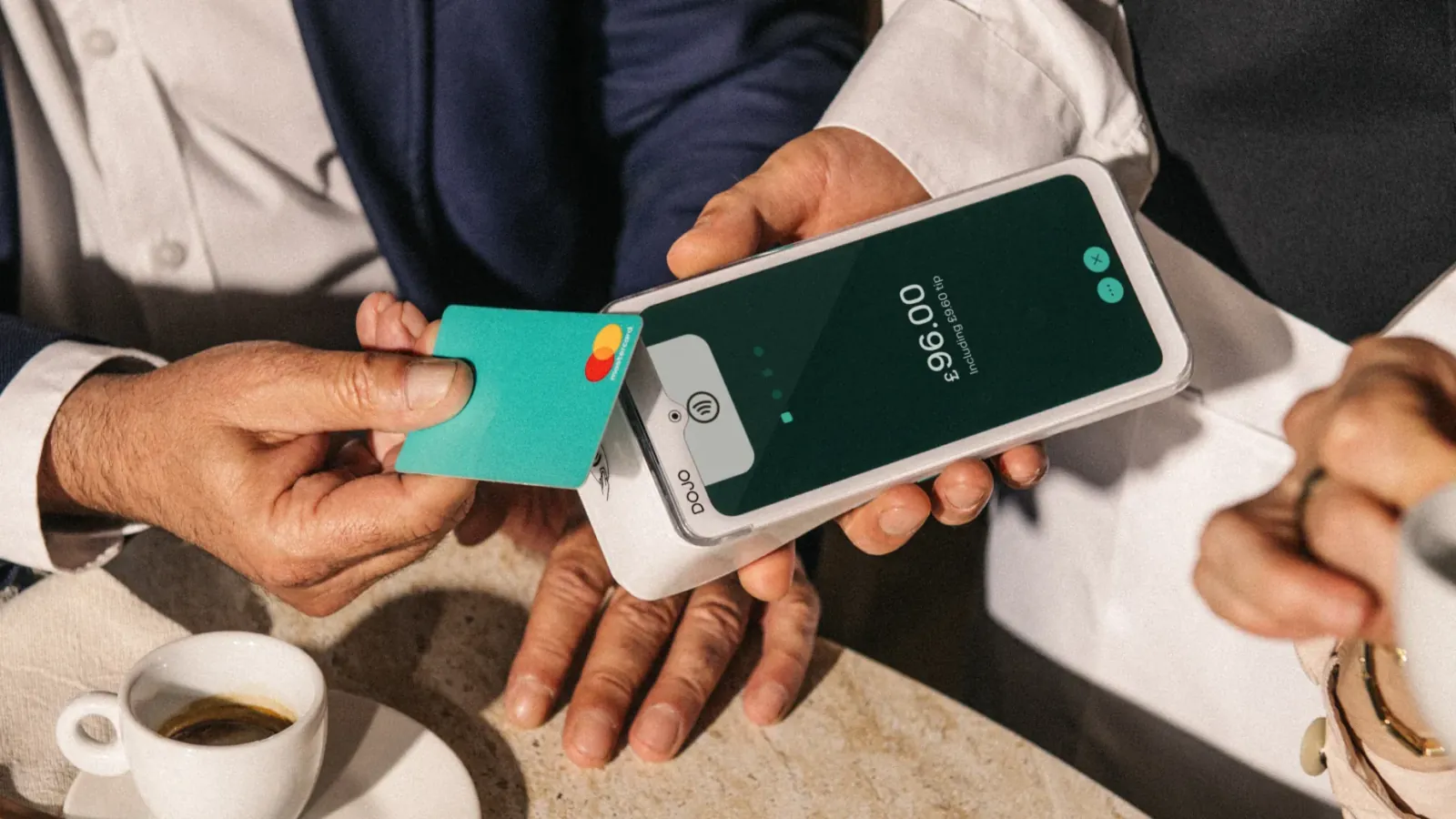
Guests want to pay quickly, and you want payments that reconcile easily. NFS connects Aloha EPoS to terminals from your preferred provider, sending the bill total directly to the device. With nothing to re-key, there are fewer errors and tables turn faster.

Guest paying by card on a handheld payment terminal

Key points

All the ways guests pay: chip and PIN, contactless, Apple Pay and Google Pay.
Payment at the table: with portable terminals and Aloha handhelds, guests pay from their seat, split the bill and leave a tip without getting up.
Card data protected: point-to-point encryption (P2PE) and PCI-compliant devices keep every payment secure.
Simpler reconciliation: every payment is matched to the correct check, keeping end-of-day cash-up and reporting accurate.
Your choice of provider: stay with your current acquirer or ask NFS to suggest a partner that fits your rates and operation.

Quick-service hardware

Kit that keeps pace with quick service.

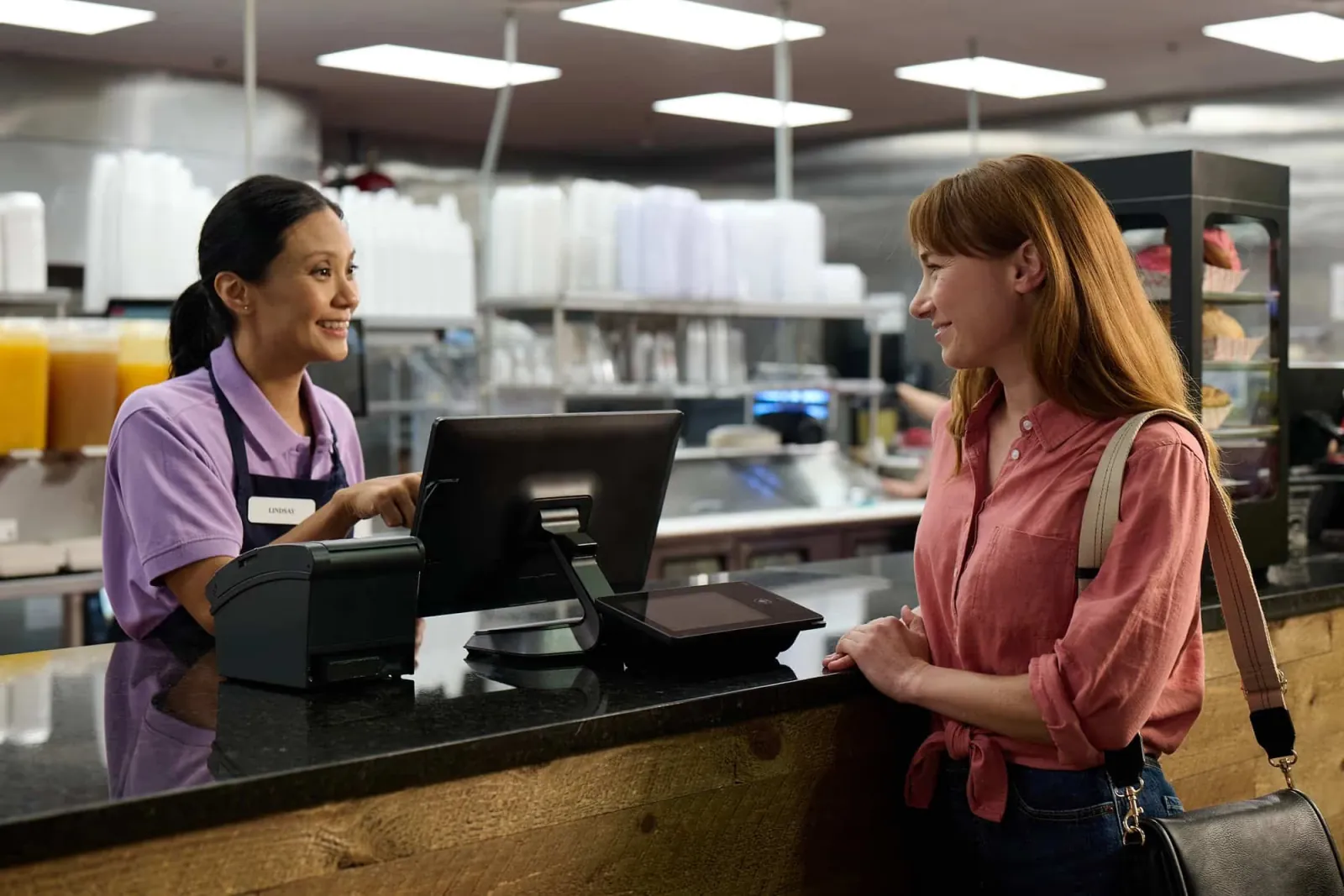
Quick service puts every device under pressure, order after order. NFS supplies Aloha EPoS hardware that brings counter, kiosk, delivery and drive-thru orders together in a single system, used by brands such as Burger King, KFC and Jollibee.

Customer ordering at the till in a quick-service restaurant

Key points

All channels, one system: tills, kiosks and delivery orders all go through Aloha EPoS, with no extra tablets and nothing to re-key.
A single kitchen queue: KDS screens and bump bars gather every order into one digital queue in place of paper tickets.
Ready for drive-thru: order confirmation screens and timings keep lanes flowing during peak periods.
Set up and supported: NFS installs, configures and looks after every device, so your QSR site can trade from day one.